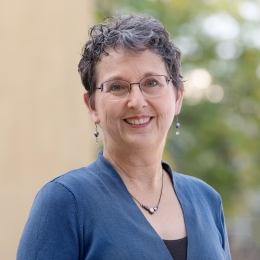
 Marie Curry, managing attorney at Community Legal Aid, grew up in a household where lively conversations around the dinner table were the norm. Curry’s nurse practitioner mother and healthcare administrator father ignited her interest in health, setting her on a path that would culminate in becoming one of the foremost experts on health policy and its intersection with the law.
“Health is really the foundational piece for me,” she said. “And the law is the tool.”
While attending the University of Rochester and then Harvard Law School, Curry took every opportunity to immerse herself in health policy. During law school, Curry became involved in early iterations of what is now known as medical-legal partnership work. She became captivated by the idea of creating change at the systems level. After several moves around the country and a stint in private practice, Curry went back to school to earn her master’s in public health from John Hopkins.
Her next move – joining Community Legal Aid in Akron first as a volunteer, then as an Equal Justice Works fellow, and now as a full-time staff member – would marry all her passions and experience. As part of her policy work at Community Legal Aid, Curry partners with community members and organizations to develop recommendations for implementing health policies that reflect the needs of low-income Ohioans. Because she is also the managing attorney of Community Legal Aid’s Health, Education, Advocacy and Law (HEAL) project, she has firsthand knowledge of how policy decisions impact clients.
“We get to bring the whole legal services organization to the table for these policy conversations in a way that many policy people don’t have access to,” she said. “Lots of policy people sit at the table, and they don’t have access to anybody who actually does the work or to the people being served. And so it’s really an ideal blending.”
A key part of Curry’s success has been her ability to build relationships. Curry is co-chair of Ohio Consumers for Health Coverage, serves on several committees, and has been a board member of various community groups. Over the years, she’s honed her approach to working with others, particularly when engaging community members from different racial and socioeconomic backgrounds.
“I have learned how to be a different kind of community member and to think differently about how to solve problems,” she said. “It’s a way that says, ‘What ideas do you have?’ as opposed to, ‘Here’s an idea, let me tell you how it would work.’ I think that will be my legacy in the end, being a community person in that way.”
Her ability to bring people together and to find common ground is what she considers her most significant career accomplishment.
“The thing I have discovered about myself is I am a connector,” she said. “When I hear information, my instinct is to connect people, to talk about it together, and to figure out what the next steps are. Being entrenched in these different kinds of community spaces – it really gives me a lot of professional joy.”
The Ohio Access to Justice Foundation is the largest funder of civil legal services in Ohio. A gift to the Foundation supports Ohio’s legal aids.